How To Write a Book
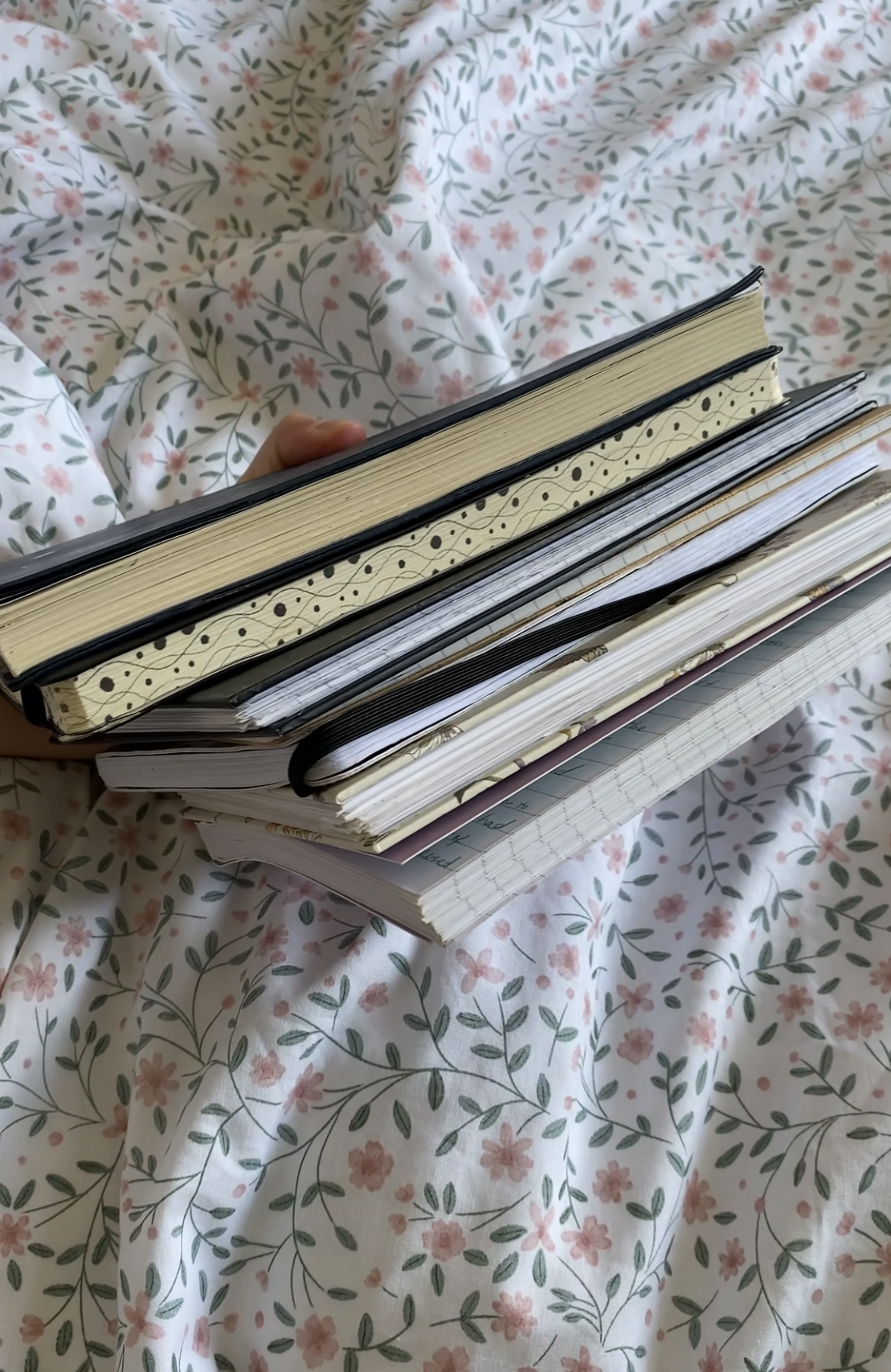
The handwritten first drafts of All The Things I Wasn’t
When I first began writing my debut novel, All The Things I Wasn’t, I had no idea that I was writing a book…
In fact, the thought of doing such a thing hadn’t even crossed my mind. And yet, many months (ahem, a few years) later, that’s exactly what I had done. I’d written a book. How the hell had I managed that? You may be getting the sense by now that none of this was part of some grand master plan—and you’d be dead right.
I turned to creative writing during one of the most stressful periods of my life. My day job was unfulfilling (to say the least), I had invested years of my life and obscene amounts of energy into a path that I was doubting whether I even wanted to be on anymore and I had no idea which way to turn. For some reason I started to think about a story I had daydreamed up over a decade previously. Daydreaming has always been my thing, but I’d never before thought about turning the little movie scenes that play incessantly in my brain into anything more than that. Until one evening, mentally and spiritually exhausted, I picked up a notebook and began to turn that short story into words. I didn’t know how to write fiction; I hadn’t once attempted it as an adult. I hadn’t taken a course or done any research. I did not have a plan. All I had was a love of books and stories, an obsessively over-active imagination, a notebook and a pen. And then came the most unexpected part—once I picked up that pen and scribbled a few words, they began to come at me faster than I could write them down. Each night I went back to the notebook and each time I wrote it triggered more and more inspiration until eventually, the notebook was full. Then the second notebook was full. And then, I realised, I just might have something here.
Don’t get me wrong, I did not have a complete and entire book flow out of me in one go and I eventually found those stumbling blocks that everybody talks about. There were countless moments along the epic journey that is writing a first book where I didn’t think I would make it, where I thought I would never get to a finished product that I was happy with and where I had no clue what I was doing other than muddling through. At first, I was only writing the scenes that I wanted to—the fun bits to write; the ones that came easily. And that meant that by the time I realised I might be able to turn my scribbles into something more, I was staring down two notebooks full of handwritten and, in places, barely legible paragraphs committed to paper in no particular order and riddled with plot holes and inconsistencies. Safe to say, I had my work cut out for me.
At this point, you might think I would have pulled out my trusty old laptop and begun the process of putting my words into a more manageable format. And you’d be wrong. What I actually did was buy several more notebooks whereby I wrote the whole thing out again, this time in some semblance of order and with a focus on turning the random scenes into something resembling a story. It was a long, drawn-out process and one I would not change for anything. It was in this chaos that I began to understand the story I was trying to tell. It was whilst nursing hand-cramp and callouses that I properly met my characters and learned who they were and what they stood for. It was also probably the reason it took me so long to get to a finished manuscript. But, hey, I had all the time in the world—I wasn’t writing a book, remember?
When I did eventually realise that writing a book was exactly what I was doing, I had a wobble. I’d never done anything like this before. I hadn’t written creatively since childhood, I wasn’t artistic, I wasn’t capable. One of the first questions I searched up online was how long a novel in my genre—which I also didn’t have a clear idea of—should be. Answer—anywhere from 70,000 to 90,000 words. Up until then, the longest thing I had ever written was my degree dissertation at 10,000 words and that had been unwieldy enough to work with. Not only was I now expected to write something nine times the length of the longest thing I’d ever written, even better—the content had to all come miraculously from my own brain. No sources to rely on, no journal articles to rephrase. Just me, my imagination and my decade old laptop, crafting a story that not only needed to be coherent and complete but also somehow needed to entertain? Cue panic.
As any good millenial would, I spent a whole lot of time insatiably Googling and watching TikTok creators for any kind of writing and publishing advice. Each time I got an answer to one question, five more sprang up in its place. It was (and still is) like learning to speak a different language. What actually are all the different genres? How do you construct a story? What does showing rather than telling mean? Are you sure there isn’t a limit to the amount of times you can type the word ‘said’? And although I stand by the assertion that the way you go about writing your book is deeply personal, and it should be unique to you, there were a few pieces of advice which I found invaluable in navigating this journey. These droplets of wisdom acted as lodestones, shepherding me as I navigated the dense undergrowth of the writing world and I’d like to share them with you in the hopes they can help guide you too. Here we go…
The First Draft Is For You
Nobody is more critical of an author’s work than the author themselves. There are times when you are writing where the words flow out of you as if pouring from a tap. Where you enter the coveted ‘flow state’ and become little more than a vessel for the story that is passing through you and being born on the page. Other times writing is like walking through mud. Words stop coming easily, the vision for the story goes haywire and you wonder if you had temporarily taken leave of your senses when you decided to sit down to write in the first place as every word that comes out of you is clunky and dull. And none of this is more true than in the writing of your first draft.
The first draft is an awesome, dramatic place to be. At times you are so excited by your idea, so moved by your plot, so in love with your characters that it’s like you enter their world with them. And at other times you are so taken over by self-doubt that it becomes touch and go as to whether you will ever finish. And here’s the thing—many, many writers don’t. There are countless stories sitting in draft format in laptops around the world never to be finished, including my own.
I truly believe that if you can commit an entire first draft to paper then you can finish a book. The first draft, in my experience, is the hardest part of the whole process. It’s the part where you feel the most self-doubt. It’s the part where it is easiest to give up. Once the first draft is completed it becomes harder to walk away from. What do you mean you have gone to the gargantuan emotional, mental and physical effort of writing an entire novel—regardless of how good or bad you think it is at this point—and you’re just going to walk away from it unfinished, unshared? Much less likely to happen.
The advice, widely attributed to author Terry Pratchett, which got me through the first draft and which I repeated to myself constantly was this:
“The first draft is just you telling yourself the story.”
Let that sink in.
The first draft is justyou telling yourself the story.
It does not need to do anything else. It does not need to be anything else. It never needs to be read by anybody but you. The first draft is where you make the story exist. It’s where you create a beginning, a middle and an end. It’s where you start to get an idea of the story you are trying to tell and—even for you planners out there—it is quite possibly where you begin to understand the story which is trying to be told through you, and that may not necessarily be the same thing.
What does this mean in practice? Well, I would suggest it means that when you finish your first draft and you read it back you are probably going to think that a lot of it is rubbish. And more importantly what this means is that that is ok. In fact, it’s more than ok—it is vital. Because if you can’t get out of your own way long enough to get that first draft down, warts and all, then you are never going to have a book. Facts.
What this also means is that the pressure is off. Write whatever comes to you, write with passion, let the story flow through you, litter your work with placeholders and question marks that you will fix later. It’s ok not to have all the answers at this stage! It’s ok if the story structure doesn’t work right now or if the characters are inconsistent or the plot is contradictory. All of this will be ironed out later because that’s what second and third drafts are for. All the stages of your writing have their own important place in the process and the only job of the first draft is to make the story exist. That’s it.
Can You Answer These 5 Questions?
I’ll be honest, this one probably came a little late in the day for me when I was writing All The Things I Wasn’t. For the planners amongst us, you may find that you are answering these questions before you’ve even committed a single word of your novel to paper—great! But if you’re like me and have found yourself deep into editing before coming across this advice, don’t despair, these questions are still invaluable in making sure you understand your story and therefore make it the best it can be.
The questions below could certainly be used as a planning tool but I also found that as I was coming to writing a pitch for my book, this was the advice that helped me get clarity on what my novel was about, on what I was trying to say with it. The answers were already there in the story I’d written but getting clear on what they were elevated my work. It may be a funny way round to do things but hey, I’m well-versed in that!
Perhaps this advice is well-known in the industry but I heard it from Gina Denny (@gina129 on TikTok) who, by the way, gives some amazing advice in general. She talks about these five questions often in terms of submitting query letters if you are looking to go down the traditional publishing route but, as above, I think they are a great tool at any point for getting and keeping you focused, understanding your characters and your story.
When you think about your story, can you answer these five questions?
Who is the main character?
What do they want?
What are they willing to do to get it?
What is standing in their way?
What happens if they fail?
To give you an example, I’ve answered these questions below for All The Things I Wasn’t.
Emily Taylor, 33, Corporate Solicitor.
To stop living life the way she has been told to and to figure out what she really wants.
Walk away from the life and career she has spent her entire twenties building and go travelling.
Parental expectations and social conditioning which has overshadowed her inner voice.
She will have to return to the life that has kept her small, stuck and unhappy.
If you can answer all of these questions clearly and concisely, well done! You are well on your way to crafting your story the way you want to tell it. I find these questions are super helpful for getting to the heart of things. By the time you’re finished with your first draft, depending on what type of book you are writing, you could have a 60,000, 100,000 or even higher word count. It’s essential that you have a way of keeping yourself on track and telling the story you are trying to tell.
Write the Story, Make the Mistakes
Every now and again something inevitable happens. I am going about my business, working on my books when I come across something I haven’t heard of before. It might be a piece of advice, an editing tip, a writing concept or something else and I inevitably fall into a research rabbit hole. This is not inherently wrong. In fact, in many ways, it’s a great thing. I am broadening my writing knowledge and, undoubtedly, developing my craft incrementally each time this happens.
The problem is this. In the game of improving your writing, there is simply no substitute for writing. This may come as unwelcome news to you, but it has to be said—if you want to be a writer, you have to write.
There is an absolute wealth of information about all aspects of writing, editing and publishing out there on the internet. There is some absolutely incredible, free advice from extremely knowledgeable people who can help you to hone your craft. All of this is true. It is also true that if you spend all of your time down the rabbit hole, learning about writing, you will never be a writer.
I give this advice from experience. Because for all that I did get my book there in the end, I also spent a hell of a lot of time procrastinating in the name of ‘research’. Again, this time spent was not without value. But convincing myself that I was progressing my book by allowing weeks to go by where the only ‘work’ I did on it was to watch videos of other people online talking about writing was not helping me to be a better writer. It was not progressing my book. And it wasn’t going to get me to the place I wanted to be.
In learning how to write well, you first have to learn how to write badly. There is no shortcut to this. There is nothing that you can learn, read about or research that will enable you to bypass this step. You, like me, like every other writer (yes, even your favourite, famous and bestselling author) will have to write some rubbish. You will likely have to write lots of rubbish. And that rubbish will be some of the most valuable writing you ever do. Because it is in writing the rubbish that you learn how to write well.
So, by all means research. Read. Watch videos. Learn from those with more experience. But, for God’s sake, do not confuse this with your actual work. The real work you are trying to put out. Do not take on so much of other people’s opinions and advice that you drown out your own voice. Do not spend more time listening to other people, no matter their experience or credentials, than you spend listening to yourself. Certainly do not spend more time listening to them than you do writing.
Because dear artist, the only way to become a writer, is to write.
In summary
If there’s one thing the process of writing a book has taught me, it’s that the act of creating is deeply personal. The way that I approach writing will look different from the way that you approach writing. You may like to start with an outline of the story you want to tell. You may carefully plot and plan each chapter, where it will sit and what function it will serve. I am not that kind of writer. The way I approach writing is much like the way I approach everything else—both feet in, let’s get started, no time for planning; I am an Aries after all. And guess what? Both ways are valid, both ways can work, both ways are magic.
In the wise words of Hozier whose music is an unending source of inspiration for me:
“Honey, there is no right way.”
Writing is an art form. Writing a book is a deeply creative, personal journey. It makes absolutely zero sense, therefore, to suggest that there is one right, superior or prescriptive way to go about this. After all, why would we want to take the creativity out of the creative process?
You may have gathered by now that this post was never really designed to tell you how to write a book. What I hope it does is show you one way, one approach amongst the many others you will come across out there in the world. Above all, I hope it gives you the confidence to just start. Start in the knowledge that there is no one right way to do this. You, like me, will find your own path. And it will be glorious.
Amy <3