To Trad Publish or to Self-Publish? That is the Question…
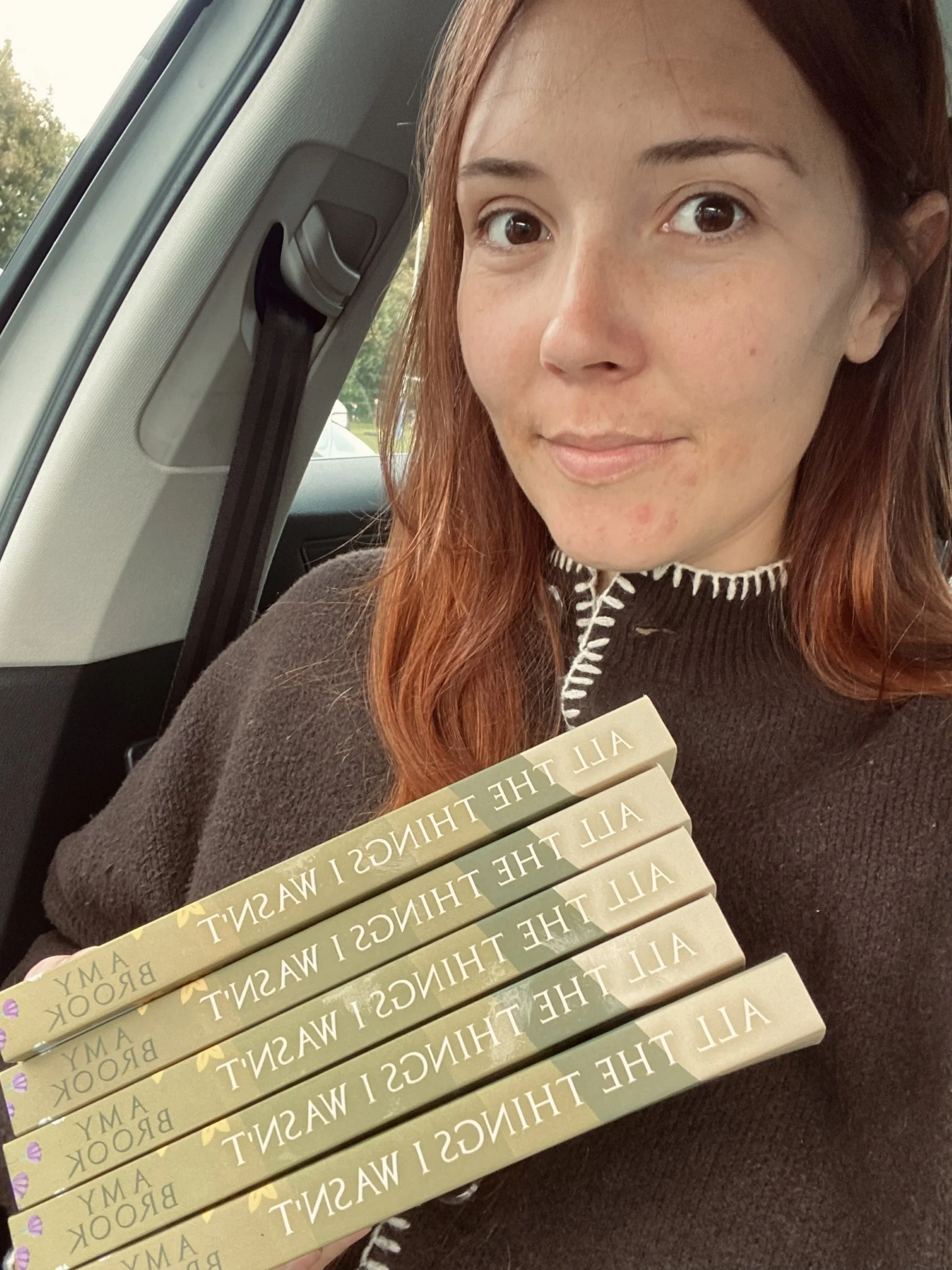
As you will know if you’ve read my other blog posts, when I started writing my first novel ALL THE THINGS I WASN’T, publication wasn’t on my radar at all…
The mind-boggling dilemma over which route to take to get my book out into the world hadn’t even entered my consciousness. I hadn’t actually set out to write a book, remember. Little did I know that writing might (dare I say it) turn out to be the easy part - or the less complicated one, at least!
If you haven’t had cause to interact with the publishing industry beyond being a buyer and reader of books then, just like I was, you are probably blissfully unaware of its weird and wonderful ways. In the early stages of looking into how I could get my book out into the world, I knew tragically little about traditional routes into publishing and even less about self-publication. After a year of researching and navigating these two worlds, this post is intended to give a little insight into what I have learned so far and the reasons that I, ultimately, opted to self-publish my first book.
Disclaimer: the very fact that self-publication was best for me means this post may inevitably show some bias towards this route. If you are reading at the start of your own publication journey and wondering which route to take, be aware that this is the case, and that I do not and couldn’t possibly cover every single relevant thing for you to consider in this single post. Ultimately, both options are equally valid and which is the best is very much a personal and subjective decision based on a multitude of factors that only you know. That said, I do hope this post helps give some helpful insights.
In the beginning
Like many aspiring authors, I grew up with a great love of reading and, because of that, a general awareness of the major publishing houses. Naturally then, when I decided I wanted to publish ATTIW, my first question was: how do I get my book into their ‘hands’? Cue much reading and research into traditional or, ‘trad’, publishing.
What I discovered probably shouldn’t have come as a surprise: in many ways the world of trad publishing runs on a different set of rules to the rest of the world. These rules are sometimes unusual, often confusing and invariably rigid. In other words, there is a way to do things if you want to stand a chance of being noticed in the trad world and you’d better do it right. Of course, if you know the right person, have the right number of followers on social media or otherwise bring a USP that will directly translate into mega-sales then you may find these usual rules don’t apply to the same extent. You may also get lucky or be in the right place at the right time. But for the majority of aspiring novelists who are mostly unknown entities to the readers they hope to reach, trad publishing is probably going to mean navigating a long and, at times, arduous process.
Traditional publishing
The first step to publication, I hope, won’t come as a shock. You’re going to need a manuscript - a good manuscript, a highly polished manuscript, a manuscript that is edited and refined to the absolute best of your ability. To be fair, this step, if anything, only becomes higher stakes should you choose to self-publish. Especially if you decide to self-edit your work.
One of the first things I learned was that publishing houses don’t accept unsolicited manuscripts from random, unheard of authors - shock. Of course, it makes perfect sense that some sort of intermediary step would be necessary here when you really think about how many unpublished manuscripts there are across the world (side note: if you are an author aspiring to publish your work, I would actually recommend that you don’ t think about this very much!)… So, what does this mean? Well, it means that before you can even approach a publisher, you are first going to need a literary agent. Yes, that does mean there are now two gatekeepers standing between your book and its readers.
There are many, many literary agents out there and each will have made clear what type of manuscript they are interested in considering. Don’t waste your time with bulk sending to agents without researching them and understanding whether your work is a good fit for them. Maybe yours is the work that will make them see what they’ve been missing in your genre, but then again, maybe they’ll hit delete as soon as they realise you haven’t bothered to respect their limited time. Remember that never-ending pile of manuscripts that the publisher isn’t reviewing directly? Yeah.
So, you’ve researched agents; you’ve narrowed down your list to only those who are open to submissions and are interested in your genre or niche; now comes the time to send them your manuscript along with a polite stock cover email and then sit back and dream of the bestseller list, right? Wrong. Remember those unusual, confusing and rigid rules for navigating the trad world?
There is a way to approach an agent and it invariably involves a ‘query letter’, a synopsis - not the same thing as a blurb, if that’s where your mind went - and a portion of your manuscript (variable by agent). I’ll be honest at this point and tell you that I am the sort of person who can get very frustrated by rigidity, by having to jump through hoops and especially by rules I do not understand. For me, the blend of a very specific way of framing a query coupled with the need to tailor each slightly to each particular agent (think cover letter and CV when you’re fresh out of education and have to apply to hundreds of jobs because you have no experience in anything), was something I did not take to easily.
Still, I did have a crack at it. I worked hard to try to produce something decent within the mind-boggling complexity of a rigid framework that expects you to be creative and stand out and I sent out around 15 agent queries. I soon realised that this was a fraction of the number of queries that my peers on WriterTok had sent out before getting any sort of interest and, with that realisation, I knew I needed to take a step back and evaluate whether this was the right way forward for me.
Yes, I could have persevered and I might… might… have eventually secured an agent. But by now I understood that would have only led me into the next round of approaching publishers who may or may not have been interested and if not, ATTIW may have ended up in the scrap pile whilst I decided to write something else which may or may not be in favour by the time it came to querying again. Ugh, I feel exhausted even thinking about it.
Now, it’s quite possible that this system may sound perfectly acceptable to you so far or, at least, the prospect of where it might lead may seem worth the effort it takes to get there. If so, that’s fantastic, you know which direction you need to go in and I genuinely wish you all the luck in the world with it.
For me, I had come to realise that this route was never going to sit well. I needed more action, I needed momentum and movement, and I needed a stronger sense of ownership and control over my destiny. And so I turned my sights towards the sometimes murky yet never boring path of self-publishing.
Self-publishing
To give you more of an insight into my decision-making process, let’s approach this section a bit differently. Below are some of the characteristics of self-publishing which convinced me this was the right path. What I’m not trying to do here is to convince you of the same - maybe you’ll feel the same as me or maybe the very factors that convinced me to self-publish will be the same things that convince you not to. Let’s find out…
Self-publishing means more control
Let’s start out strong by being clear that self-publishing is NOT the easy option. It is not what you do when your trad dreams don’t work out, it isn’t a fall-back plan for getting your book into the world, nor do I think it should be the route you take purely because you don’t want to hear criticism of your work from an agent or publishing house.
It is absolutely true that when you self-publish you have a lot of control over your process and your finished product. This can be a brilliant thing if you enjoy learning, working hard and being involved in all the elements of a project. But let’s go into this with our eyes wide open, because self-publishing doesn’t only mean control over the way your story turns out, it also means complete responsibility for the editing, proofreading, cover designing, marketing, content creation, formatting AND publishing of your book. This will not be a case of uploading your file to your chosen platform and calling it a day.
As a self-publishing author I have learned how to write a copyright page, design a website, understand SEO, and what an ISBN is. I alone chose which platforms to sell my book through and I alone am responsible for understanding and abiding by the terms & conditions of those platforms. If I decide I want to get my book into a physical shop, it is me that will need to go and speak to the shop owner.
Of course, there are many professionals out there who can do some of these elements for you - for a price. If you have the money to hand some of these responsibilities over, and you want to, then great! But the reality for many debut indie authors is that money is tight and chances are, you will be doing the bulk, if not all, of this yourself. If you also work another job to pay the bills, this will take a great deal of commitment and dedication to getting the job done.
Being the decision-maker over all the elements of your project can be a rewarding path but it’s important to go into it with your eyes open. When I began to research indie publishing and all it entailed, I realised that I like learning new things, I like understanding the whole rather than just my tiny corner of it, and if I was going to do this, I wanted to have a hand in it all.
You can take self-publishing at your own pace
You don’t have a deadline, you don’t have an agent asking for updates or a date by which you have to get amendments to an editor. Nobody is telling you have to do this at all. In fact, up until your book is actually live, you technically don’t even have to tell another living person what you’re doing. And this is a very double-edged sword.
On the one hand, there is less pressure from external sources. You can move at a pace you feel comfortable with and you can ensure that by the time that book goes live to the world, you feel ready. If you are ready right away - fantastic! You don’t have to wait for someone else to love your book and want to publish it. You don’t have to wait for the cogs of the very large trad industry to turn. You can be nimble and put your work out there quickly. By doing so, you get to not only put your work out there (the goal, obvs) but you also get to move. on. Because, if you’re anything like me, sitting on a project that is ready to spread its wings and fly into the world is going to cause a lot of frustration.
On the other hand, does anyone ever really feel ready?
If you know that without external pressure you are likely to procrastinate to the detriment of your work or end up giving up on the idea of putting it out there altogether, then you will want to consider carefully how you would navigate this should you choose to self-publish.
This doesn’t have to be a deal-breaker, though! Maybe you tell your close friends and family what you are doing and ask them to provide some gentle nudges; maybe you put a publication date out on your social media, or maybe you schedule a release date on your chosen platform (which will give you a very real deadline for uploading your manuscript!)
For me, being able to set the pace myself was a positive. Don’t get me wrong, I can procrastinate with the best of them but when there is something I really want, I can also be extremely driven. On the flip side, I know that pressure from external deadlines would dry up my creative energy faster than you can say trad. For you it might be the opposite - you might need that external input and pressure. Only you know.
The way you get paid is different
Bear with me, because there are no cut and dry answers coming up here.
We’ve all heard of the giant advances trad authors get from time to time. I’m talking life-changing sums. The sort of money that lets you quit your day job and write full-time. The dream, right? Yeah, you’re not going to get that in self-publishing.
Now, before I lose you, remember that the reason we hear about these huge, life-changing advances is because they are rare. Yes, they happen. But for an unknown, debut author, we can’t go charging into query letters expecting this to happen. Should you get picked up by trad pub, you may very well earn a nice, more quietly life-changing advance, yes. But then again, you may not and also, have you considered, that none of these figures are paid out in one neat little lump sum but rather in stages, which may be over longer periods of time than you are expecting?
Of course, the other benefit of trad is the marketing power of the industry to, theoretically, sell more copies of your book. More copies sold equals more money in your pocket doesn’t it? Well, technically yes, but remember that royalties only come after you’ve earned out your advance. Bear in mind also that the publisher has to make money and so does your literary agent and this means them taking a cut of sales.
As an indie publisher, you are actually likely to earn a significantly higher royalty i.e. the amount of money you will actually see from each sale but, then again, remember that the onus is going to be on you to market your book and make sure you get those sales in the first place.
If you choose to self-publish, chances are you’re going to have to play the long game. After listening to both types of author experiences over the last couple of years, my impression is that many of the most financially successful indie authors started earning decent money once they had several books out there. Likely, if you take this path, you won’t be quitting the day job on your debut’s publication day.
BUT, there are many indie authors who have eventually built a catalogue of work, found their readers, established a following and begun to make the kind of money they can actually live off. It may not be the glamorous, overnight success story that we all love to fantasise about but instead it’s the satisfaction of the slow build of something sustainable. The hard graft so that one day you can look back over your body of work and say, “I did that.” When I put down my ideas of being rescued by a lottery win-like sum I realised how much this appealed to me.
If this section has left you feeling more confused than ever then, hey, I did warn you there were no cut and dry answers here. I’m nothing approaching an expert on this topic but I hope this has given you some food for thought. I’ll leave it with only one final musing - yes, money is important and so is fair compensation for your work, but if you are only in this on the off-chance of landing that dream advance, there are far easier things you could be doing.
You need to do all your own marketing
Unlike the other points I’ve included in this section, I’ve included this one precisely because it was the main reason I almost didn’t pursue self-publishing.
I hate social media. There. I said it.
And yet, it seems that if you want to put a book out into the world in this day and age, you not only have to embrace social media, you have to be a professional content creator.
I’m going to get swiftly to the point here, mainly because this post is getting pretty long and partly because I need to move on with my day - social media is the way of the world. You cannot fully escape it, at least not at first (if you think I’m wrong and you have found a way that works, please, I beg of you, tell me what it is).
The simple fact is that whether you go trad or indie, you will likely have to promote your work on social media regardless. Yes, with trad you can expect some marketing done on your behalf as well, of course. But will you entirely escape having to promote your work on social media yourself? Unlikely.
Once I realised this, social media stopped being a barrier to me self-publishing. Do I like doing it now? No. Am I any good at it? No. Do I want to keep doing it forever? No; my ultimate aim is to direct my readers to my newsletter and build my subscribers over there. My hope is that one day, by doing that, I’ll be able to retreat from social media. Until then, I’ll keep getting on with it.
That being said, if you really, truly don’t want to and it’s killing all your hopes and dreams and extinguishing the creative fire inside of you then, DON’T DO IT. Start a newsletter, build a website, promote your book in person (yes, that’s still an option), accept the slow build. Do what works for you.
In the end
You can only do what feels right for you right now. Try not to tie yourself in knots about this decision. Consider your personality and how you work. Think about what would be the best fit for you, regardless of what anyone else thinks. Follow your heart. Pick a path and commit. Remember that both paths are equally valid. Don’t go into self-publishing thinking that it is somehow lesser than trad. Don’t be afraid to pivot from pursuing trad if you have an inkling that indie would work better for you. Don’t forget to have fun with the process. Remember that, in the end, the point is to put your work into the world and hope that it connects with someone. There are all different ways to get there. It is that deep and it’s also really not that deep. Whatever you choose, I wish you luck, inspiration and, above all, fun.
Amy
x